


FOR SKIERS & SNOWBOARDERS
SEE BETTER.
SKI BETTER.
HAVE MORE FUN.
How to improve your vision on snow and keep your goggles performing at their best.
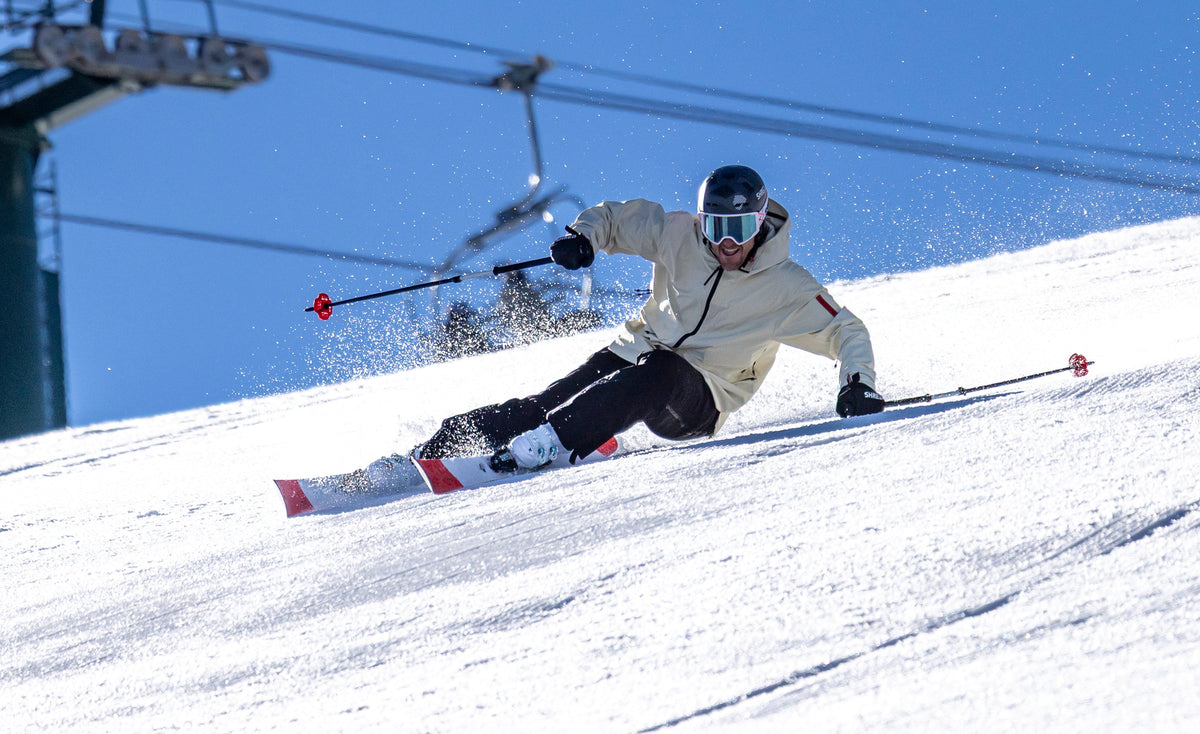
Header image: Ted Ligety. Photo: Eric Schramm.
Seeing a bump or a change in slope before you reach it makes a difference. The better you read the terrain, the more confidently you can choose your line, control your movements, and enjoy your time on snow.
Choosing the right goggle lens is essential. Taking care of your goggles is just as important, whether they are brand new or you have been using them for years.
Since 2006, we at SHRED. have been studying how to improve vision on snow, combining materials engineering, optical research, and the experience of world-class athletes.
Here is what we have learned and what you can do to make the most of your goggles, whatever brand you wear.
BETTER VISION.
MORE CONFIDENCE.
Your ability has not changed.
|
 |
Better vision helps you recognize changes in the snow surface, anticipate terrain features, and make more informed decisions about your speed and line.
And when you can trust what you see, you can focus more on your technique, your surroundings, and having fun. No lens makes every icy patch or obstacle visible; keep adapting to the conditions in front of you.
VISION. CONFIDENCE. PERFORMANCE. FUN.
CHOOSE THE RIGHT LENS.
Contrast matters.
A good goggle lens does more than reduce brightness and protect your eyes from the elements. It helps you distinguish useful details in the snow.
Contrast-enhancing lenses use specially formulated filters and tints to help make terrain features stand out. Several technologies are available, each taking a different approach.
When choosing your next goggles, consider these five elements, alongside UV protection, field of view, and a comfortable fit with your helmet.
| CONTRAST | Can the lens help you distinguish subtle differences in the snow surface, especially in flat light? |
|---|---|
| OPTICAL CLARITY | Does it provide a sharp image without distracting optical distortion? |
| GLARE MANAGEMENT | Can it reduce uncomfortable reflections while preserving useful terrain detail? |
| LIGHT CONDITIONS | Is it appropriate for the light in which you normally ski or snowboard? |
| ANTI-FOG PERFORMANCE | Do the lens treatment, ventilation, and fit work together to manage moisture and maintain visibility? |
What about VLT?
Visible light transmission (VLT) measures the percentage of visible light passing through a lens. It is useful, but it does not directly measure contrast enhancement, terrain definition, optical distortion, or distracting glare.
Brightness and the ability to read terrain are not the same thing.
Read what VLT means, then explore why VLT alone does not tell the whole story.
TAKE CARE OF YOUR GOGGLES.
A great lens deserves great care.
Scratches, moisture, contamination, and damage to the anti-fog treatment can compromise a lens’s performance. A few simple habits can help preserve it.
01KEEP YOUR GOGGLES ON YOUR FACE.
In snowy or wet conditions, avoid resting your goggles on top of your helmet or beanie. This exposes the face foam to moisture, which can contribute to fogging once you put them back on.
Keep the foam as dry as possible and the ventilation openings clear.
02PROTECT THE INNER LENS.
THE CARE RULE TO REMEMBER
NEVER RUB THE INSIDE
OF YOUR LENS WHEN IT IS WET.
The inner surface often has a delicate anti-fog treatment. Rubbing it while wet can damage that treatment and impair its performance.
If snow gets inside, gently shake it out and allow the lens to dry. Avoid touching the inner surface unnecessarily, even when dry. Follow the manufacturer’s instructions for any cleaning that is needed.
03CLEAN THE OUTSIDE GENTLY.
Remove loose snow, dirt, and particles before wiping. Use a clean, soft microfiber goggle bag or a lens cloth recommended by the manufacturer.
Avoid gloves, sleeves, paper towels, and household cleaning products. They may damage the lens or its coatings. Use the clean inside of your goggle bag for the outer lens.
04LET YOUR GOGGLES DRY NATURALLY.
After a day skiing or snowboarding, let your goggles dry completely at room temperature before storing them. Keep them away from radiators, hair dryers, and other direct heat sources.
Do not leave damp goggles inside a closed bag or case. Remove the lens only if the manufacturer’s instructions recommend it for your model.
05PROTECT BOTH SIDES OF YOUR LENS.
An external lens cover protects the front of your goggles, but the inner lens needs protection too. Once your goggles are completely dry, store them in a clean protective bag or case.
|
SHRED. EXPERT TIP When storing your goggles in their soft bag, position the strap so it stays outside the bag rather than against the inside of the lens. This helps keep dirt, grease, and moisture from the strap away from the delicate inner surface. |
 |
For detailed instructions, consult our complete goggle lens-care guide.
STILL PERFORMING
AT THEIR BEST?
Before your next day on snow, take a few minutes to check your goggles.
YOUR FIVE-POINT GOGGLE CHECK
| LENS | Look for scratches, cloudiness, cracks, or damage that interferes with your view. |
|---|---|
| ANTI-FOG | Notice more frequent fogging? Check moisture, airflow, and the condition of the inner treatment. |
| FOAM | Check that the face foam is intact, resilient, and comfortable. |
| VENTILATION | Make sure ventilation openings are clean and unobstructed. |
| FIT | Check the seal against your face and compatibility with your helmet. |
Well-maintained goggles do not necessarily need replacing simply because they are a few years old. If optical performance, structure, or fit has deteriorated, it may be time to replace the lens or the goggles.
If fogging persists after correct drying and care, ask the manufacturer for advice rather than assuming the whole goggle needs replacing.
YOUR VISION IS WORTH TAKING CARE OF.
YEARS OF STUDYING
VISION ON SNOW.
FROM OLYMPIC ATHLETES TO EVERYDAY SKIERS & SNOWBOARDERS
|
When Ted Ligety and materials engineer Carlo Salmini founded SHRED. in 2006, they shared a simple ambition: develop equipment that helps people perform better and have more fun on the mountain. Improving vision on snow has been central to that mission from the beginning. |
 |
- 2006SHRED. is founded.
- 2016Collaboration with students and researchers at MIT begins, focusing on vision in flat light.
- 2022Contrast Boosting Lens™ 2.0 technology debuts at the Beijing Olympic Winter Games.
- TODAYThe same lens technology is available to recreational skiers and snowboarders.
MIT News documented the early research in 2018. Read SHRED.’s account of the 2016 collaboration and 2022 Olympic technology debut.
Make the right details pop.
Filter out the noise.
Contrast Boosting Lens™ 2.0 technology combines SHRED.’s contrast-enhancing dye with a specialized, partially polarizing filter tuned for snow. The aim is to make useful terrain details stand out while reducing distracting reflections.
The research helped shape the technology. Professional athletes put it to work on the Olympic stage; everyday skiers and snowboarders can use it too.
Independent testing adds useful context. In its 2024 goggle roundup, Blister reviewed GRATIFY with Contrast Boosting Lens™ 2.0 technology and reported versatility in flat and mixed light. One reviewer preferred a darker lens for all-day bluebird conditions. Conditions and personal preference still matter.
20 YEARS OF EXPERIENCE. ONE CLEAR PURPOSE.
BOOST YOUR PERFORMANCE. BOOST YOUR FUN.
 |
ABOUT THE AUTHOR Carlo SalminiSHRED. co-founder and CEO. Carlo has spent more than two decades developing eyewear and protection technologies, combining materials engineering, research, and feedback from world-class athletes. |
EXPERIENCE THE DIFFERENCE
DEFEAT FLAT LIGHT.
SHIELD GLARE.
ONE LENS. ALL CONDITIONS.
SHRED. Contrast Boosting Lens™ 2.0 technology.
Developed in collaboration with MIT Sports Lab to enhance contrast and terrain definition while managing distracting glare. The all-conditions ICE formulation is designed for changing winter daytime light.

From cloudy mornings to sunny afternoons, spend less time thinking about your lens and more time enjoying the mountain.
THE LENS FOR YOUR WINTER DAY.
SHOP SKI & SNOWBOARD GOGGLESFor extreme glacier brightness or nighttime skiing and snowboarding, choose the appropriate dedicated lens and check model compatibility.
YOUR QUESTIONS, ANSWERED
SKI & SNOWBOARD
GOGGLE FAQ.
Why is good vision important when skiing or snowboarding?
Clear vision helps you recognize terrain changes, obstacles, and other people on the slopes. It supports better-informed decisions about speed, direction, and movement, helping you ski or snowboard with greater control and confidence.
What is flat light in skiing and snowboarding?
Flat light occurs when diffuse lighting reduces visible shadows and contrast across the snow surface. Bumps, depressions, and changes in slope become harder to distinguish. It is common in overcast and snowy conditions.
Are contrast-enhancing goggle lenses worth it?
Contrast-enhancing lenses can help reveal differences in snow texture and terrain features that are harder to distinguish in challenging light. Their effectiveness depends on the optical formulation and the conditions. Fit, clarity, and lens care also matter.
What should I look for when choosing ski or snowboard goggles?
Consider contrast enhancement, optical clarity, appropriate light transmission, glare management, UV protection, field of view, anti-fog performance, and compatibility with your helmet. Try the goggles on to check comfort and fit.
Does VLT determine how well I can see through my goggles?
Not on its own. VLT measures the percentage of visible light transmitted through a lens. It does not directly measure terrain definition, contrast enhancement, optical distortion, or perceived glare.
Can one goggle lens work in different weather conditions?
Yes. Some lens formulations are designed for a broad range of light. SHRED. Contrast Boosting Lens™ 2.0 technology in its ICE formulation is designed for changing winter daytime conditions. Dedicated options remain appropriate for extreme glacier brightness and nighttime skiing and snowboarding.
How do I prevent ski goggles from fogging up?
Keep the face foam dry, avoid resting goggles on your helmet in wet weather, keep vents clear, and let goggles dry completely between uses. Avoid rubbing the inner lens, especially while wet. If fogging persists, check fit and follow the manufacturer’s care advice.
Can I clean the inside of my goggle lens?
Only if needed and according to the manufacturer’s instructions. The inner surface often has a delicate anti-fog treatment. Never rub it while wet. Let it dry before attempting any recommended cleaning procedure.
Can I clean ski goggles with a microfiber cloth?
Use a clean, soft cloth suitable for coated optical lenses, as recommended by the manufacturer. For the outer lens, SHRED. recommends the clean inside of the protective microfiber goggle bag. Remove loose particles first. This does not make rubbing a wet inner lens appropriate.
Can I use glass cleaner or alcohol on my goggles?
Avoid household glass cleaners, solvents, and alcohol unless the manufacturer explicitly confirms compatibility with its lens and coatings. They may damage sensitive optical treatments.
How should I dry my goggles after skiing or snowboarding?
Let them air-dry fully in a ventilated place at room temperature. Avoid radiators, hair dryers, and heaters, and do not store them while damp. Remove a lens only as directed for your specific model.
How should I store ski goggles during the summer?
Make sure they are completely dry, then store them in a protective bag or case in a cool, dry place away from direct sunlight. Protect the inner and outer surfaces. With a SHRED. soft bag, keep the strap outside so it does not rub against the inner lens.
How often should I replace ski goggles?
There is no universal replacement interval. Inspect them regularly and consider replacement if scratches, persistent fogging after correct care, damaged foam, poor fit, or structural damage interfere with performance. A compatible replacement lens may be enough if the frame, foam, and strap remain in good condition.
Can scratches on a ski goggle lens be repaired?
Do not try to polish them out with abrasive compounds or household remedies. This can damage coatings or introduce distortion. If scratches interfere with your vision, replace the lens with a compatible one.
What is SHRED. Contrast Boosting Lens™ 2.0 technology?
It is SHRED.’s proprietary lens technology developed through collaboration with MIT Sports Lab. It combines a contrast-enhancing dye with a specialized, partially polarizing filter to enhance terrain definition and reduce distracting glare on snow.
How do the ICE, GLACIER, and NIGHTTIME formulations differ?
Within SHRED. Contrast Boosting Lens™ 2.0 technology, ICE is the all-conditions formulation for changing winter daytime light. GLACIER is designed for extreme brightness, including high-altitude glacier use. NIGHTTIME is for very low light and nighttime skiing and snowboarding. Check compatibility with your goggle model.
Keep learning: Goggle lens care · Understanding VLT · The science of changing-light vision · The SHRED. story

Leave a comment
This site is protected by hCaptcha and the hCaptcha Privacy Policy and Terms of Service apply.