


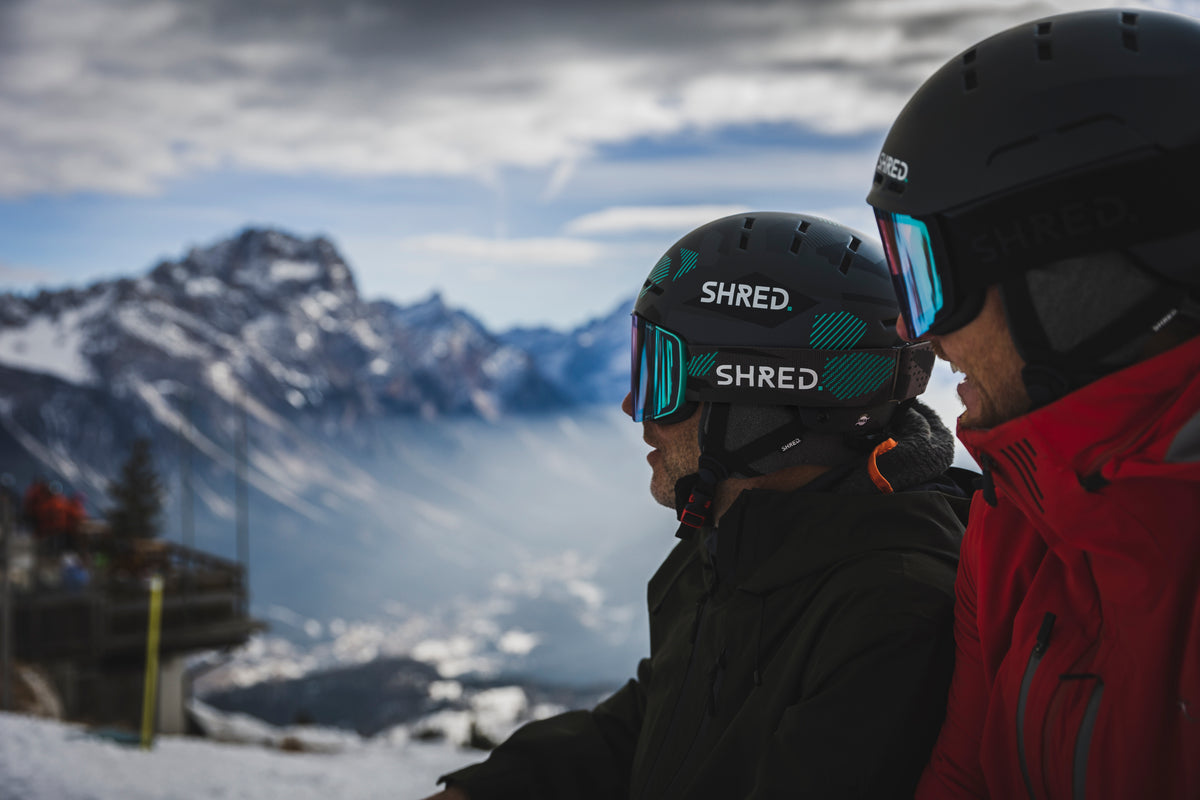
YOUR PRE-SLOPE HELMET CHECKLIST
5 checks before you head
back to the slopes.
Shell. Impacts. Fit. Age. Certification.
A few minutes of attention before your next day skiing or snowboarding.
Header photo: Sam Decout.
Wearing a helmet matters. So does checking that it is in good condition and fits correctly.
For 20 years, SHRED. has brought materials engineering and professional athletes’ experience together to develop protection for snow sports.
Here are five checks you can make in a few minutes, whatever brand of helmet you wear. Use them alongside the instructions for your specific helmet.
CHECK ITS CONDITION.Examine the outer shell and the impact-absorbing liner inside. Look for cracks, dents, deep scratches, or foam that is crushed, broken, or deformed. Check the chinstrap for fraying or damaged stitching. Fasten the buckle and make sure it closes securely and the adjustments hold. What to do: Replace a helmet with structural damage or damaged retention parts. If you are unsure whether a mark is cosmetic, ask the manufacturer before using it. |
 |
REVIEW ITS IMPACT HISTORY.Has your helmet taken a significant impact in a fall or collision? The internal structure may be compromised even if the shell looks intact. A visual inspection cannot rule out hidden damage. What to do: Replace it after a significant impact. Do not wait for visible cracks. |
CHECK THE FIT.Your helmet should sit level, cover your forehead, and feel snug all around without painful pressure. It should stay stable as you move your head. Fasten the chinstrap snugly and comfortably under your chin. Try the helmet with your goggles: they should work together without pushing the helmet back or pressing the goggles down. What to do: Adjust it according to its instructions. If it remains loose, rocks around, or creates pressure points, choose a better-fitting size or model. |
CHECK ITS AGE.Light use does not give a helmet an unlimited lifespan. Use, sunlight, sweat, temperature changes, and storage conditions can affect its materials and fit. As general SHRED. guidance, plan to replace a helmet every 3–5 years, depending on use and the manufacturer’s instructions. Follow any shorter replacement interval specified for your model. What to do: Check the manufacture date, purchase record, and instructions. Replace earlier if it is damaged, takes a significant impact, or no longer fits correctly. |
CHECK THE CERTIFICATION.Make sure the helmet is designed and certified for alpine skiing and snowboarding. Find the label inside and check the applicable snow-sport standard, such as EN 1077 or ASTM F2040. Choose the certification required for your activity and destination. A bike-only helmet is not a substitute for a helmet certified for snow sports. What to do: If the label is missing or unreadable, verify the model and certification with its manufacturer. Do not assume it is suitable. Racing may have additional requirements. |
BETWEEN DAYS ON THE MOUNTAIN
TAKE CARE OF YOUR PROTECTION.
Clean gently.Use a soft cloth, lukewarm water, and mild soap, following the manufacturer’s instructions. Avoid solvents, harsh detergents, and soaking the helmet. |
Dry and store properly.Let it air dry naturally. Store it in a cool, dry place away from direct sunlight and heat. Avoid a hot car or heavy objects resting on it. |
For a closer look at inspection, cleaning, storage, and replacement, read our complete ski and snowboard helmet-care guide.
|
YEARS OF SHRED. ENGINEERING MEETS
|
 |
TIME TO REPLACE YOUR HELMET?
20 YEARS OF EXPERIENCE.
PROTECTION DESIGNED FOR YOU.
Olympic athletes’ experience, materials engineering, and technology research guide the development of SHRED. helmets. Explore protection, comfort, and performance designed to help you focus on what you love: skiing, snowboarding, and having fun.
 NOTION NOSHOCKHybrid construction. All-mountain comfort. |
 TOTALITY NOSHOCKDurable ABS shell. Dial-adjusted fit. |
 BASHER ULTIMATELow-profile hard-ear design for racing. |
YOUR QUESTIONS, ANSWERED
SKI & SNOWBOARD HELMET FAQ.
When should I replace my ski or snowboard helmet?
Replace it after a significant impact, if the shell or impact-absorbing liner is damaged, if its straps or buckle are damaged, or if it no longer fits correctly. SHRED.’s general planning guidance is every 3–5 years, depending on use and the manufacturer’s instructions. Follow any shorter interval specified for your helmet.
Do I need to replace a helmet after a crash if it looks fine?
If the helmet took a significant impact, yes. The impact-absorbing structure may be damaged without visible cracks in the shell. An undamaged appearance cannot confirm that it is ready for another impact.
How should a ski or snowboard helmet fit?
It should sit level, cover your forehead, feel snug without painful pressure, and remain stable as you move. Fasten the chinstrap comfortably under your chin and follow the model’s fitting instructions. If adjustment cannot achieve a stable fit, try another size or shape.
How can I tell how old my helmet is?
Look for the manufacture date on its label or in its markings, then check your purchase record and the manufacturer’s service-life instructions. The manufacture date and first-use date are different: follow the timing specified for your model. If you cannot establish its age or history, ask the manufacturer before relying on it.
Does a helmet need replacing if I rarely use it?
Infrequent use does not remove the need for inspection or the manufacturer’s replacement interval. Storage conditions and age still matter. Inspect it before each return to the mountain, including the shell, liner, straps, buckle, and fit.
Can I use a bike helmet for skiing or snowboarding?
Only if that specific helmet is also certified for the snow sport you will use it for. A bike-only certification does not establish suitability for skiing and snowboarding. Check the actual label and instructions.
What certification should I look for?
Look for certification for alpine skiing and snowboarding, such as EN 1077 or ASTM F2040, as applicable to your destination and use. These are examples, not interchangeable legal requirements for every location. Racing can require additional approval; verify the rules for your discipline and event.
Should my helmet fit differently with goggles?
Your goggles should work with the helmet without shifting its position, pushing it back, or creating uncomfortable pressure. Try both together before buying and recheck the fit with the goggles you actually wear.
Is it a good idea to buy a used ski helmet?
A used helmet can have an impact history or storage history that is difficult to verify. A clean exterior does not rule out hidden damage. Choose a helmet whose age, condition, certification, and history you can establish.
Can I clean my helmet or replace the padding instead of replacing it?
Cleaning and manufacturer-approved comfort pads can help maintain hygiene and fit. They do not repair structural damage or restore a helmet after a significant impact. Follow the instructions for removable padding and read our helmet-care guide for more detail.


コメントを書く
このサイトはhCaptchaによって保護されており、hCaptchaプライバシーポリシーおよび利用規約が適用されます。